The problem EP numbers try to solve
Anyone who reads the literature on arbuscular mycorrhizal (AM) fungi soon meets a frustrating situation. A species is described under one name, moved to another genus a few years later, and sometimes merged with a second species altogether. Meanwhile, sequences in public databases may carry the old name, the new name, or only a vague label such as “uncultured Glomeromycota”. A reader who wants to know whether two studies worked on the same organism can lose hours following this trail.
EP numbers were created to cut through that confusion. They are stable identifiers that point to a biological entity rather than to a name. A name is a human convention and can change; the entity, defined by its DNA, stays the same.
What an EP number is
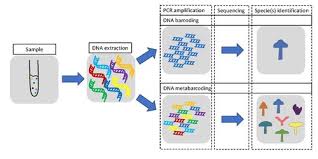
In the species list maintained by the authors of this site, an EP number is an identifier given to a species that is characterized by DNA barcoding. The barcode in question is mainly the D2 region of the large subunit (LSU) ribosomal RNA gene. When a lineage has been resolved with this marker and the data have been examined with species-resolving analyses, it can be assigned a number.
The number does not describe the fungus in any way. It does not tell you the genus, the morphology or the ecology. It is simply a label that can be attached to the same set of sequences whatever the current taxonomic opinion happens to be. Think of it as a catalogue number in a museum: the specimen keeps its number even if the label on the display case is rewritten.
Why names alone are not enough
Taxonomic names in fungi are subject to several kinds of change, and each of them can break the link between a paper and the organism it studied.
- Transfer to another genus. New phylogenetic evidence often shows that a species was placed in the wrong genus, and the combination changes.
- Synonymy. Two names turn out to refer to the same species. One becomes the valid name and the other is relegated to a synonym, although both may still appear in older papers and databases.
- Splitting. A morphologically defined species may be shown to contain several genetically distinct lineages, so the old name no longer points to one thing.
- Misidentification. A culture or sequence may have been deposited under a name that was never correct for it.
When any of these happens, a name-based comparison silently compares unlike things or fails to link like things. A stable identifier tied to sequence data avoids most of these traps.
Cross-study comparability
The main value of EP numbers is comparability between studies. Suppose one research group reports a fungus from a field experiment, and another group reports a fungus from a greenhouse trial years later. If both can be placed on the same EP number, the two results can be combined with confidence, even if the authors used different names or if the species has since been renamed.
Together with species-resolving analyses, the numbers allow this comparison to survive nomenclatural change. This matters for meta-analyses, for reviews of host specificity, and for anyone building a picture of which fungi occur where. Without a stable identifier, such syntheses depend on how carefully each author tracked taxonomic revisions, and that is rarely done well.
A practical example of the logic
Imagine that a species formerly placed in one genus is transferred to another. A paper from before the transfer and a paper from after it use different binomials. A reader who searches only by name will treat them as separate. A reader who looks up the EP number of the underlying lineage will see at once that they are the same fungus. The reverse also holds: if two papers use the same name but the sequences fall on different EP numbers, the reader is warned that the name has been applied to more than one lineage.
Species known only from the environment
Many AM fungi have never been grown in culture, and many have never been seen as spores. They are known only because their DNA was recovered from roots or soil. Ordinarily such sequences end up with labels that carry little information and are hard to compare across projects.
EP numbers are also used for these species. In this case the numbering rests on the SSU-ITS-LSU DNA fragment, a longer stretch of the ribosomal RNA gene region that the group established as a barcoding marker for AM fungi more than a decade ago. Because this fragment spans the small subunit, the internal transcribed spacer and the large subunit, it carries enough information to place an environmental sequence next to named, cultured relatives and to separate it from them when it is truly distinct.
The result is that cultured and uncultured fungi can live in the same framework. A lineage that is first seen in an environmental survey can receive a number, and if a spore is later found and described, the formal name can simply be linked to the existing identifier.
This is why the approach appeals to ecologists running sequencing-based surveys. Their data are dominated by sequences without spores, without cultures and often without a formal name. A numbering system gives such data a common currency, so a result from one soil or host plant can be set beside a result from another.
How to use EP numbers in your own work
Some simple habits make EP numbers useful in practice.
- When you report a species, give the name and also the identifier of the lineage it belongs to, so that readers can trace it later.
- When you read an older paper, check whether the name has changed and whether the sequences it cites fall on a known identifier.
- When you submit sequences, record as much information as you can about the source material, so that the placement can be checked by others.
- When you compare your results with those of another group, compare identifiers first and names second.
The species list itself is kept as a spreadsheet that contains valid and some invalid species names, with links to PDF files of formal descriptions and emendations. It is intended as a working reference, not as a final authority.
Limits and cautions
EP numbers are only as good as the data behind them. A number based on a single short marker cannot resolve every closely related species, and where the barcode itself is poorly characterized, the boundaries of an entity may be uncertain. Numbers are also not a replacement for formal taxonomy: they do not create valid names, and they do not settle questions of nomenclature.
It should also be said plainly that the site and its data come from a project that is scheduled to close by the end of 2024. Some information may therefore be outdated from the formal point of view, and readers should check recent literature for later changes.
Even so, the idea behind the numbers remains sound. Names will keep changing as knowledge improves, and that is healthy. What researchers need is a reliable way to know that, behind a changing name, they are still talking about the same fungus.