Why reference data matter
Arbuscular mycorrhizal (AM) fungi, the phylum Glomeromycota, live in close association with the roots of most land plants. They are difficult organisms to study. Their spores carry few features that can be seen under a microscope, they cannot be grown without a host plant, and many lineages are known only from DNA extracted from roots or soil. For this reason, molecular data have become central to how these fungi are classified and identified.
The paper by Krüger, Krüger, Walker, Stockinger and Schüßler (2012), published in New Phytologist 193:970-984, was written to give the community a common foundation. Its title states the aim clearly: phylogenetic reference data for systematics and phylotaxonomy of arbuscular mycorrhizal fungi from phylum to species level. In other words, the authors wanted one consistent set of data that could be used to place a sequence anywhere in the group, from the deepest branches down to individual species.
What phylotaxonomy means
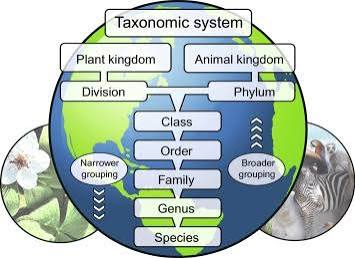
Phylotaxonomy is the practice of building a classification on the evolutionary relationships revealed by phylogenetic analysis. Names are tied to groups that share a common ancestor, rather than to groups that merely look alike. For AM fungi this approach is especially useful, because morphological characters are scarce and can be misleading. Two fungi with similar spores may be only distantly related, while two with different spores may be close relatives.
A phylogeny is only as good as the data behind it. If every research group chooses its own sequences, its own genetic region and its own alignment method, results cannot be compared easily. A shared reference set reduces this problem and makes it possible to repeat and test earlier conclusions.
The two alignments
The downloads page of the reference site offers two alignment files, both in FASTA format with the extension .fas. Each belongs to a different level of resolution.
The SSU alignment
The first file is an alignment of the small subunit (SSU) of the nuclear ribosomal RNA gene. This region has been used for many years in studies of AM fungi. It evolves slowly enough that sequences from distantly related lineages can still be aligned with confidence, which makes it well suited for questions about families, orders and the structure of the phylum as a whole.
The SSU-ITS-LSU alignment
The second file covers a longer stretch of the ribosomal operon. It combines the SSU, the internal transcribed spacer (ITS) region and part of the large subunit (LSU). The ITS region changes faster and carries information that separates closely related species, while the SSU and LSU supply the conserved background needed to place those species within the wider tree. Taken together, the three parts cover a wide range of evolutionary depth within one continuous sequence.
This longer region was established by the group as a barcoding marker for AM fungi. A barcode is a standardised piece of DNA that allows an organism to be recognised from a sequence alone. Using the full SSU-ITS-LSU fragment gives more information than any single short region, and it supports identification at the species level as well as placement in higher groups.
What an alignment is and why it matters
A multiple sequence alignment arranges several DNA sequences in rows so that positions which descend from the same ancestral position fall into the same column. Gaps are inserted where one sequence has lost or gained bases relative to the others.
Tree-building programs compare columns, so a poor alignment gives a poor tree, even when the sequences themselves are excellent. The value of a curated alignment is that experts have already checked the homology of each column. Anyone who downloads it can add new sequences to a trustworthy framework instead of starting from the beginning.
The FASTA format
FASTA is a plain text format. Each sequence begins with a line starting with a greater-than sign followed by a name, and the sequence itself follows on the next lines. In an alignment file, all sequences are written to the same length, with gaps shown by dashes. Nearly every alignment editor can open a .fas file.
How to use the alignments in practice
A typical workflow starts with your own new sequences, for example from an environmental survey of roots. You open the reference alignment in an alignment editor and add your sequences to it, using a method that keeps the original columns fixed. You then inspect the result by eye, trim ragged ends where coverage is poor, and save the combined alignment.
The next step is a phylogenetic analysis. Commonly used methods include maximum likelihood and Bayesian inference. The resulting tree is often saved in a text format such as Newick, which can be read by tree viewers. The position of your sequences relative to the reference taxa then tells you which family, genus or species they most likely belong to.
- Add new sequences to the reference alignment without disturbing its existing columns.
- Check the alignment visually, especially at the variable ITS region.
- Choose a tree-building method and a suitable substitution model.
- Assess support for the branches that matter for your question.
- Report how the sequences were selected and which alignment was used.
Choosing the right alignment for your question
The two files are not interchangeable. If your data consist of short SSU fragments from a root survey, the SSU alignment is the natural choice, and you should expect resolution at the level of genera and families rather than species. If you have longer sequences that span SSU, ITS and LSU, the combined alignment lets you ask finer questions.
It also helps to match the alignment to the taxonomic level at which you want to speak. Statements about a whole phylum need broad sampling and a conservative marker. Statements about a single species need dense sampling of its close relatives and a variable region.
Cautions when working with sequence data
The group behind the reference site has pointed to several problems in some published work, and they are worth keeping in mind whatever data you use.
- Poorly defined species. If a species name is applied loosely, sequences labelled with it may belong to different organisms.
- Uncharacterised intraspecific variability. Ribosomal genes can differ between copies within one individual and between individuals of one species. Without knowing the normal range, small differences can be misread as species boundaries.
- Biased sequence selection. Choosing only sequences that fit an expected result, or leaving out inconvenient ones, can produce a tree that looks clean but does not reflect the real diversity.
A well-built reference alignment cannot correct these problems by itself, but it makes them easier to detect, because the choices made are open to inspection.
A note on currency of the data
The site that hosts these files was created by Schüßler, Walker and colleagues, and it is planned to close by the end of 2024. The data may therefore be outdated from the formal point of view, since names and classifications continue to change as new studies appear. Treat the alignments as a well-documented snapshot of the state of knowledge at the time of the 2012 paper, and check current taxonomic sources before citing a name. Even so, the principle behind the work remains sound: shared, curated reference data make results comparable, and comparable results are what allow a field to advance.